We think you need a different kind of click.
Print. Direct mail. Signs. Swag. There are plenty of places to spend marketing money that never ask you to log in or prove you’re human. Here are some ideas.
Go on. Click the pen.
It’s the only click we recommend.
We’re quiet. The campaigns aren’t.
Ideas you could pick up, mail, sit on or hang on a wall.
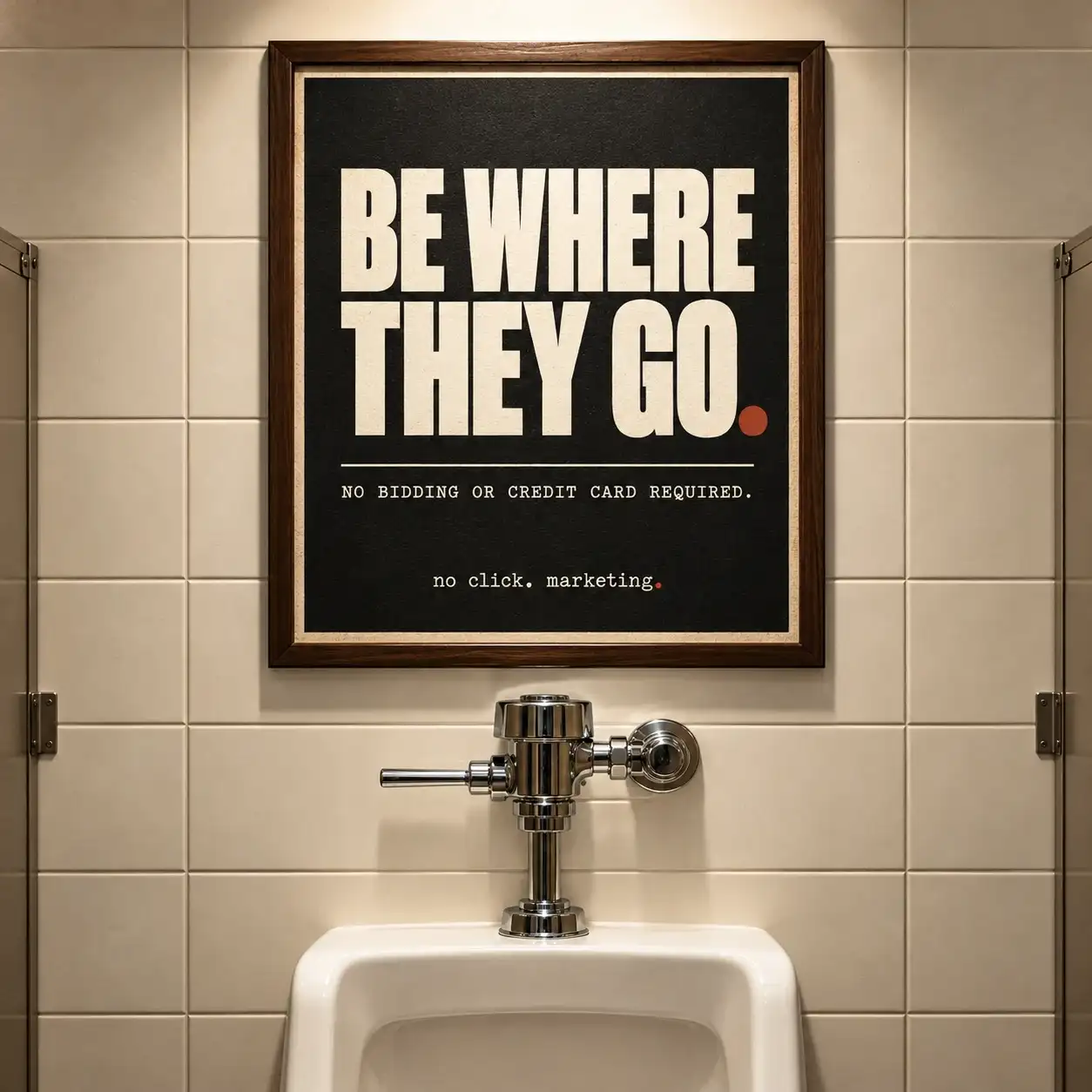
In the wild They make you bid. We just wait.
Be where they go. No bidding or credit card required. A poster at eye level, where people have a minute to read it.
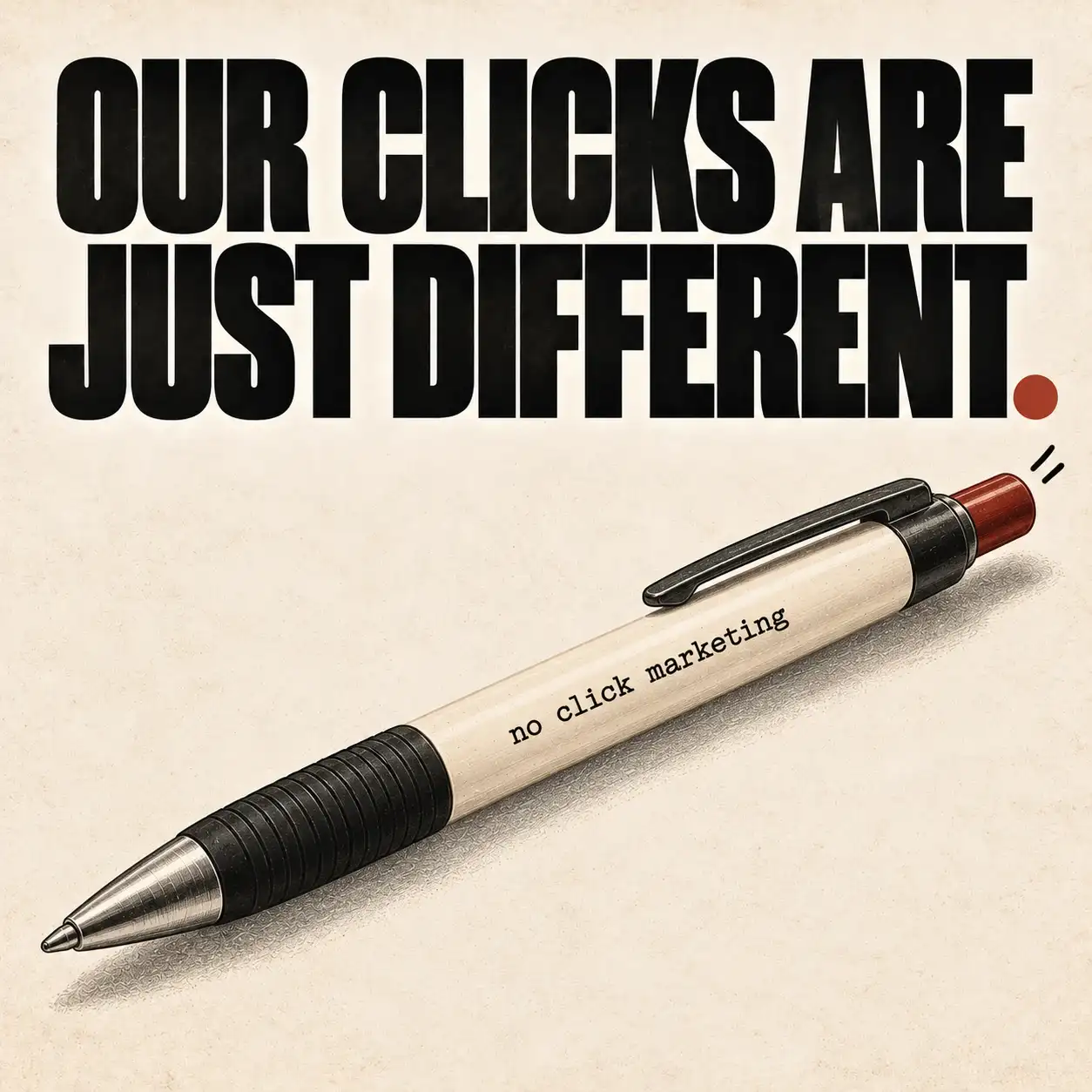
The pen You still need clicks.
We love clicks. Ours are just different.
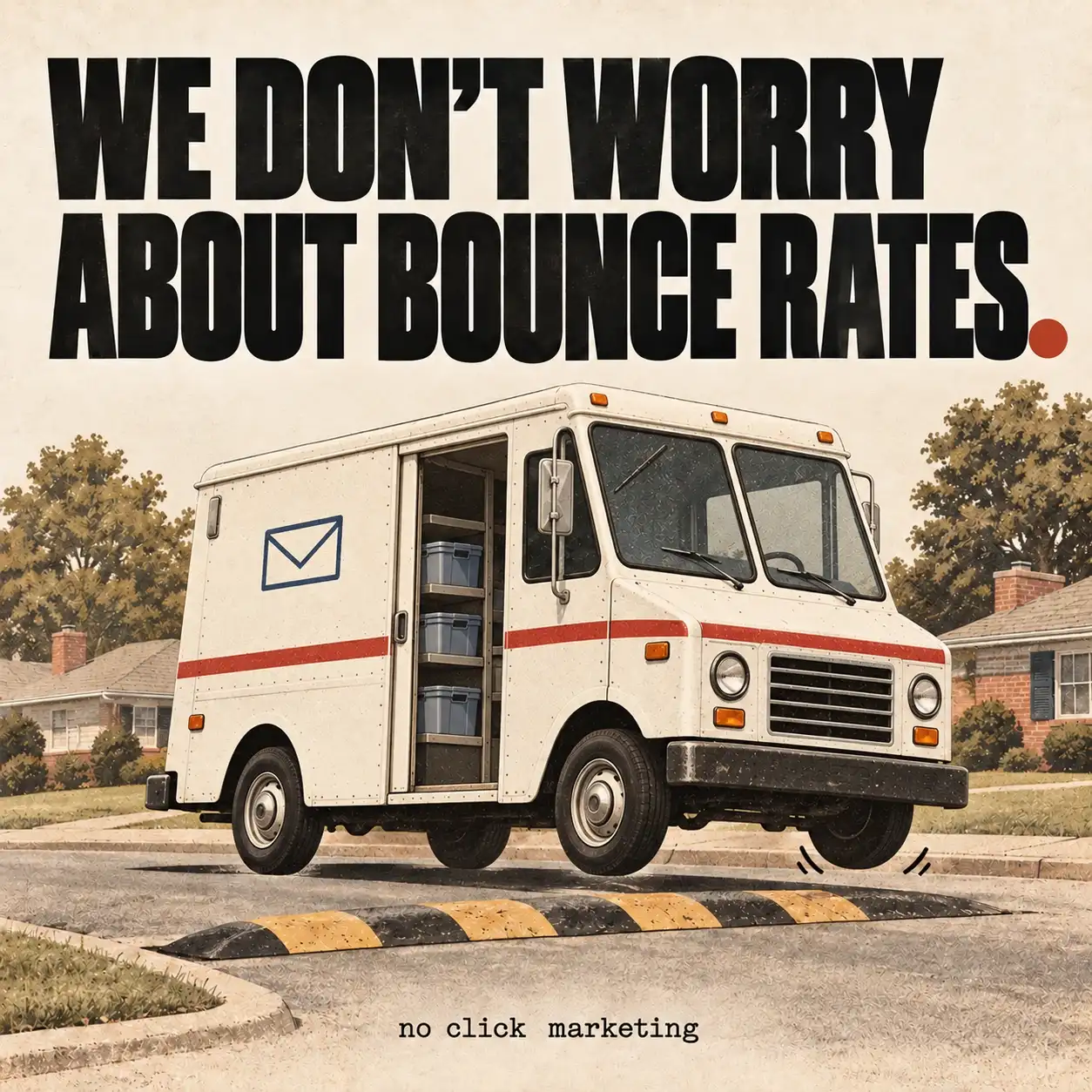
The mail truck We don’t worry about bounce rates.
The mail gets there no matter what. It still lands.
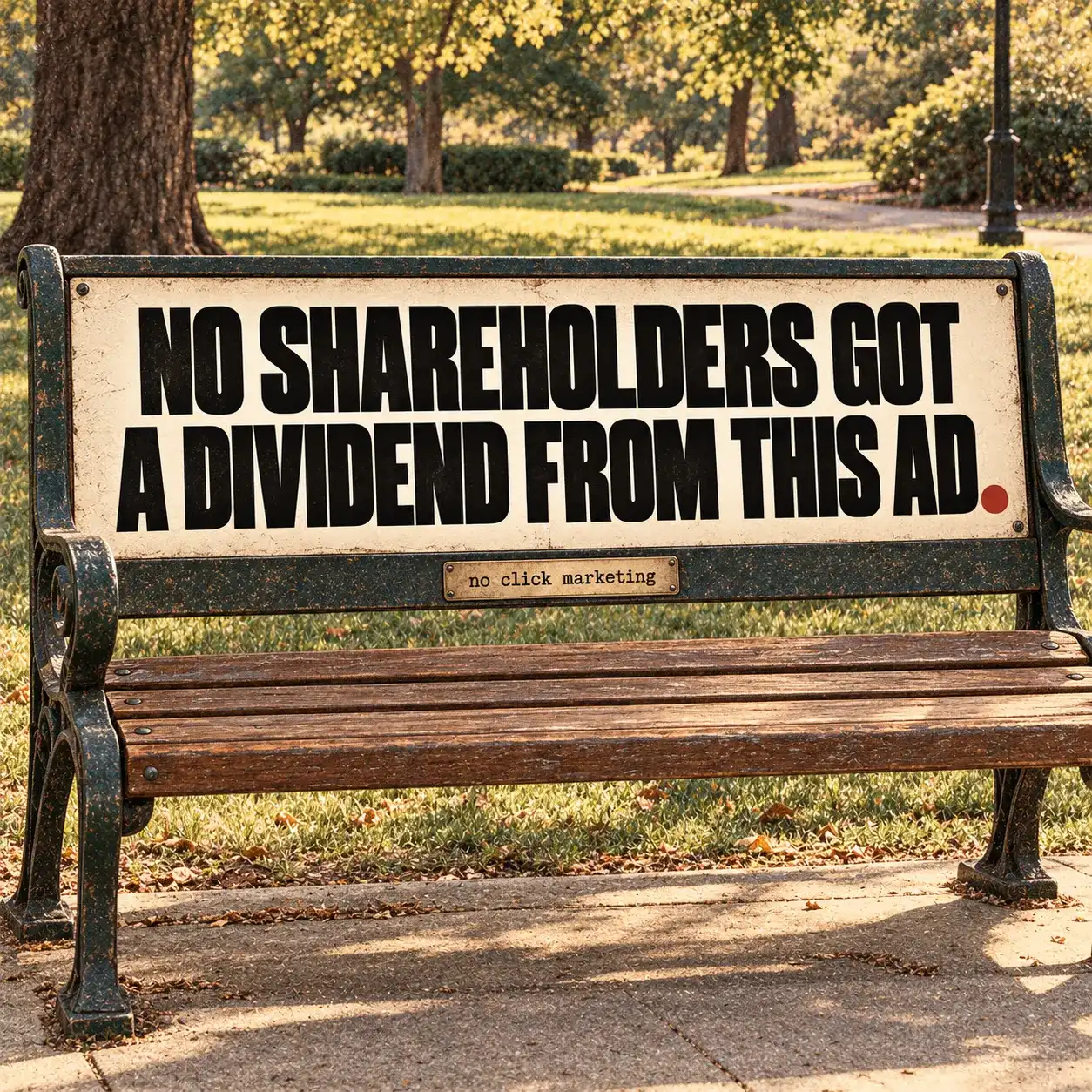
The park bench Your budget dollars shouldn’t be part of a corporate return.
Seriously: getting new customers shouldn’t require a credit check.
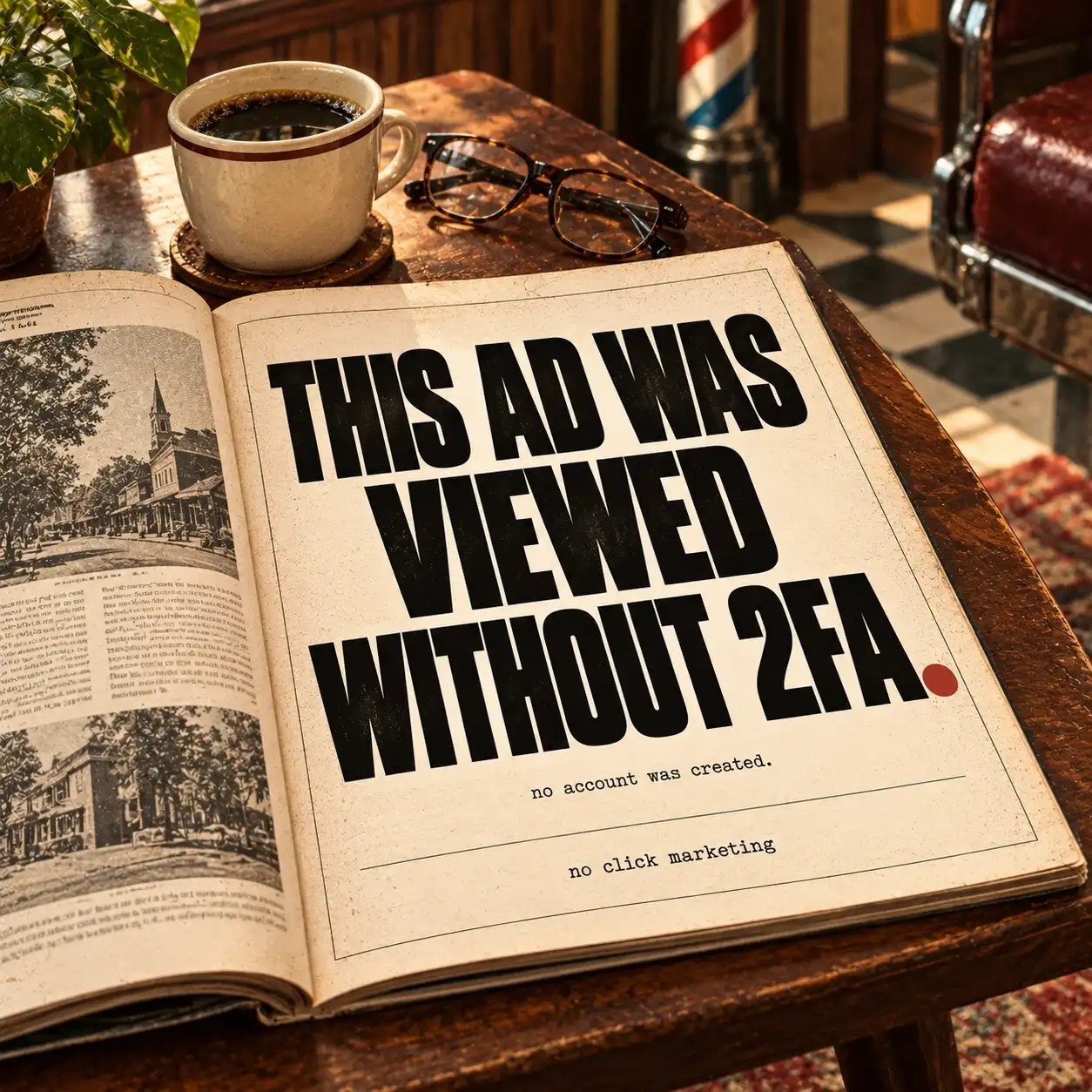
The magazine ad Everybody looks.
No terms to accept. No update to deal with.
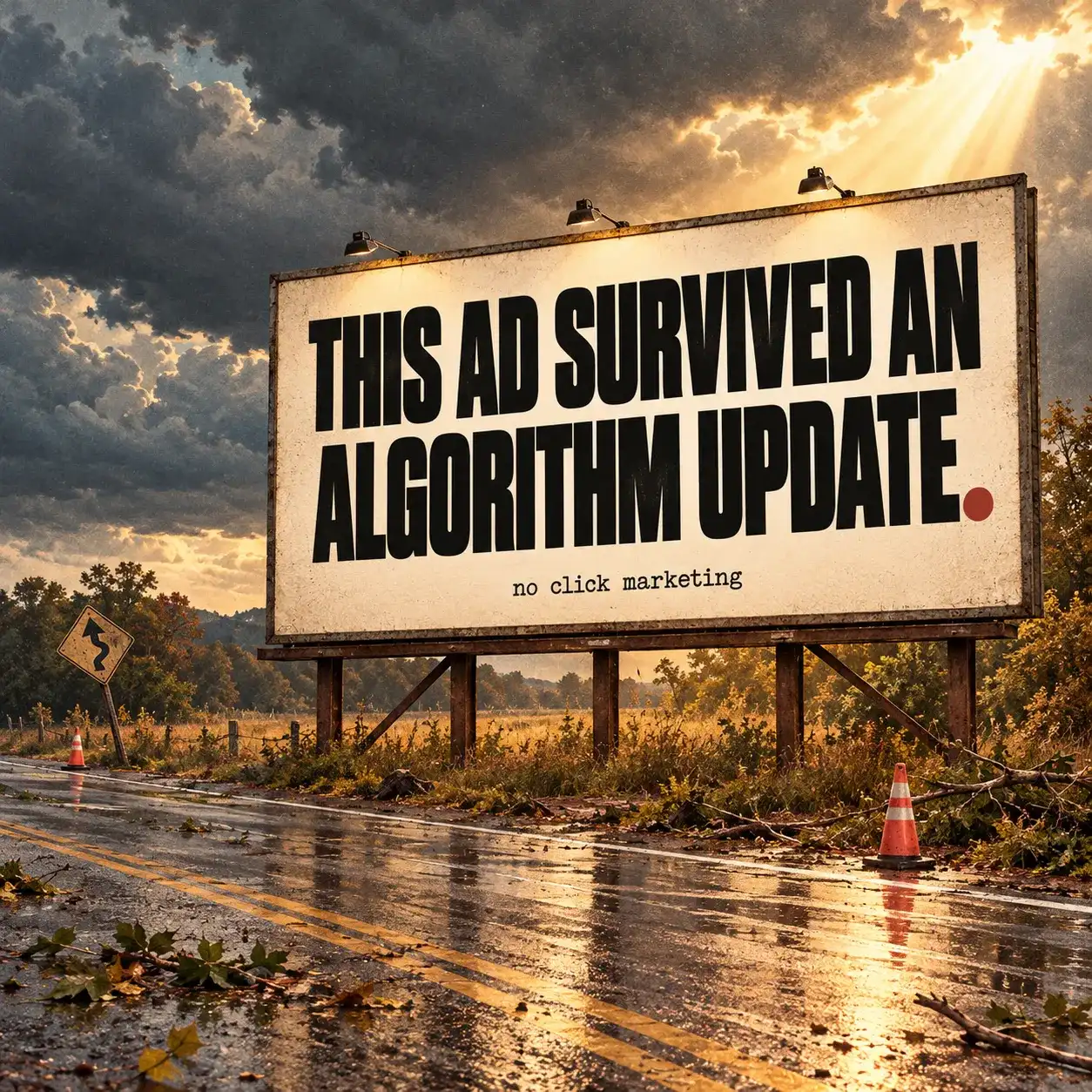
The billboard Always on.
The best way to beat an algorithm update is to not require an algorithm.
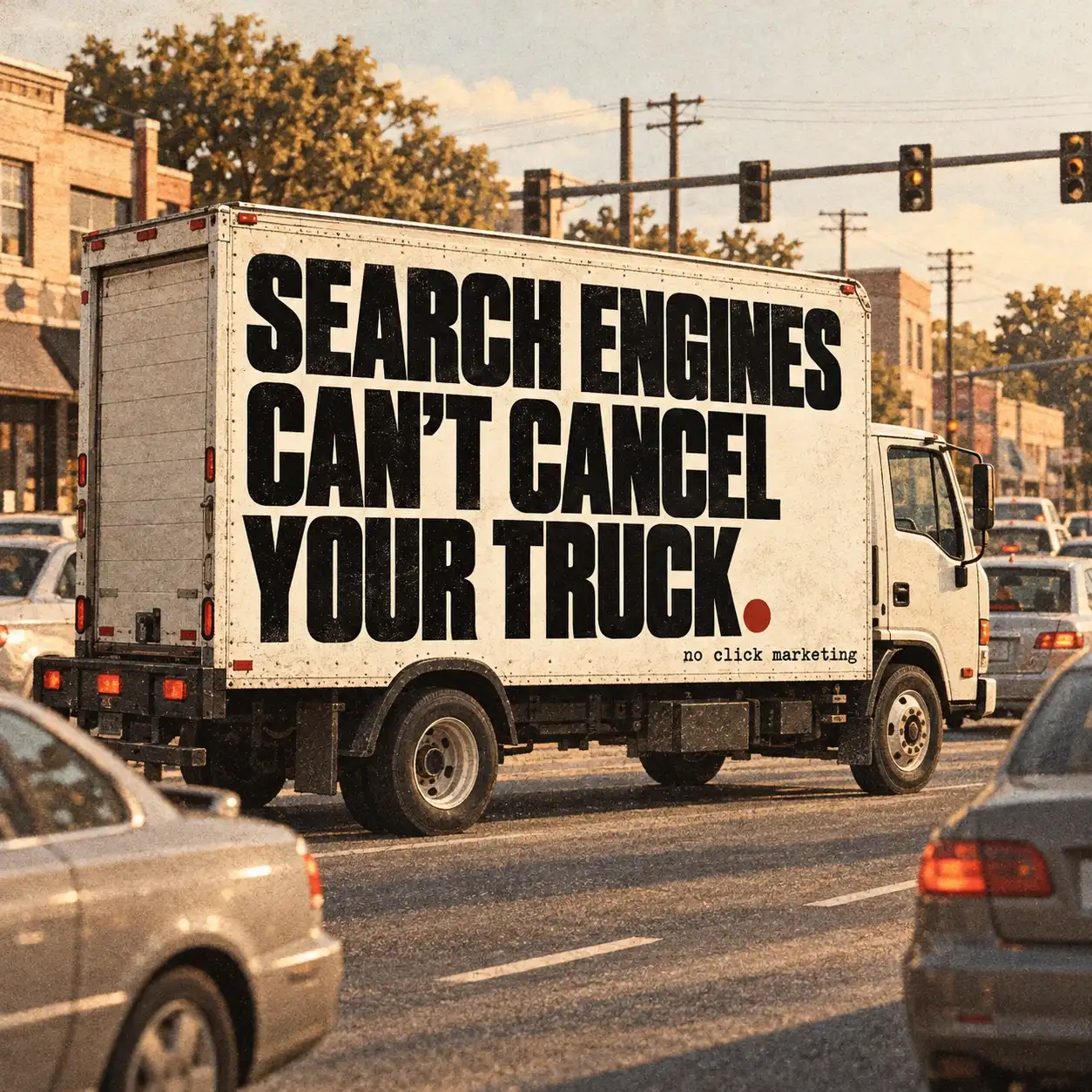
The truck wrap One cost. One time.
No bidding. No budget creep. No platform deciding you no longer exist.
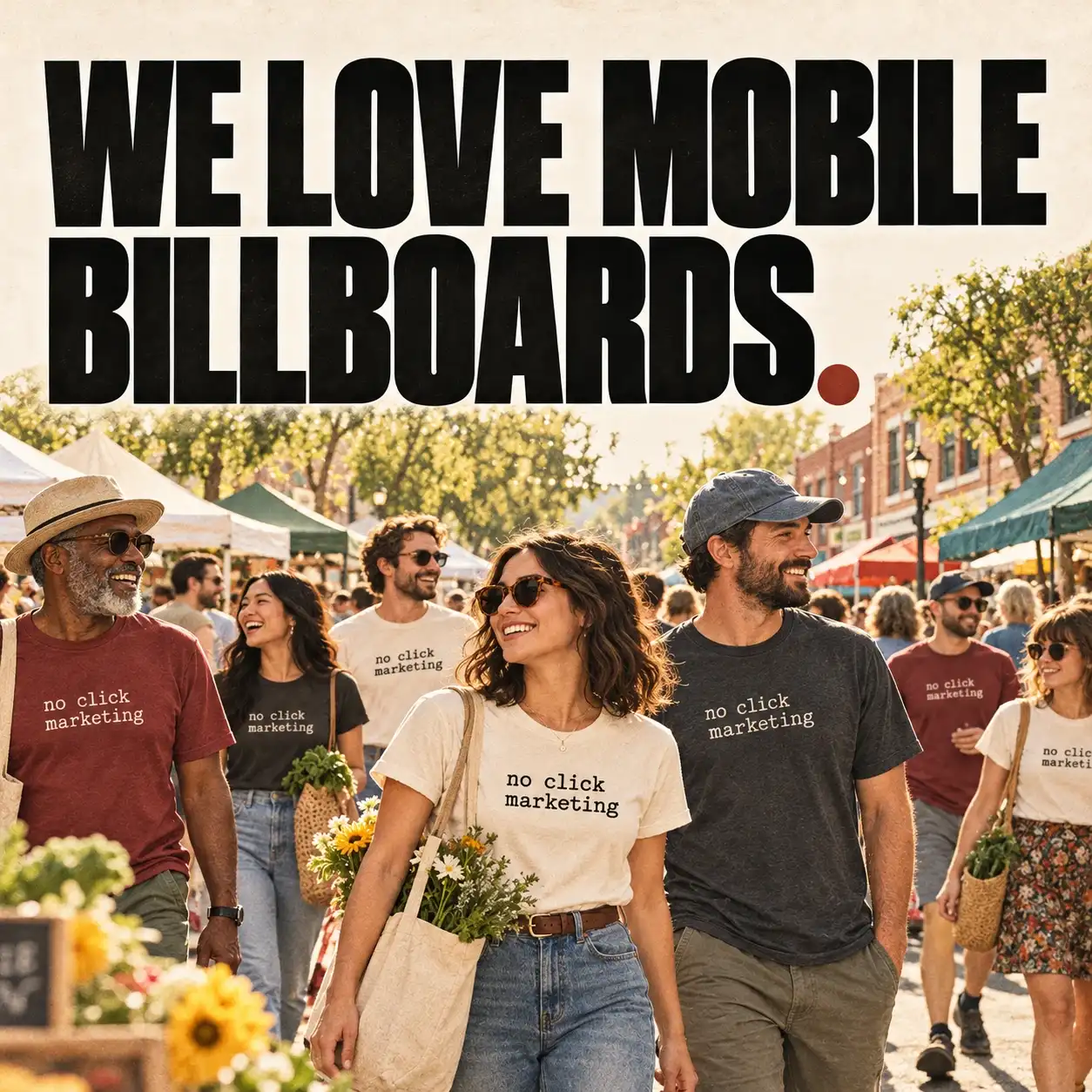
The shirts Cheap shirts become pajamas.
Good shirts get seen.
Buy good shirts.
The $1 Rule.
The system keeps getting more expensive until you’re one dollar away from quitting.
Say a lead cost you $5 last year and $10 this year. Everyone bids a little higher to stay seen, so the price only moves one direction. That’s the race to the bottom, and the bottom is your margin.
Not enough pain to leave.Not enough profit to grow.Just enough leads to keep you bidding next month.
Dead businesses don’t buy ads. So the machine keeps you alive, but hungry.
Digital helps you survive the auction. It was never built to help you win it. Every platform wants one thing from a small business: to stay in the bidding.
Physical marketing works differently.
You buy the pen once. You wrap the truck once. You print the postcard once. Nobody raises the price each time someone sees it.
Digital helps you compete in the auction.
Physical marketing means you don’t depend on it.
The $1 Rule is a way of describing how bidding feels from the owner’s chair. It’s a metaphor, not a leaked memo.
Their budget is a line item. Yours is your money.
Big companies can absorb another price increase. Their advertising budget belongs to shareholders.
When the cost of leads rises by $1,000 a month, the platform calls it market competition. You call it $1,000 less to take home.
We’re not here to tell you to delete Google, abandon social media, or throw your phone into a lake. We’re here to help you build marketing that keeps working when the bids rise, the traffic falls, or the algorithm decides it needs a little more of your money.
Go where scale can’t follow.
Being local isn’t enough. Your customers don’t owe you a sympathy purchase.
You can’t complain about Amazon while you’re closed every weekend, ignore the phone and offer store credit on a return. “Locally owned” is not a substitute for convenient, generous or good.
The big guys win on scale. You win by doing what scale can’t, or won’t.
Create an experience that makes someone feel they discovered the right place. It’s the one thing no AI system can provide, replicate or replace.
It’s the big idea in The Power of Moments by Chip and Dan Heath: the moments people remember aren’t accidents. They’re built on purpose. That’s your advantage. Use it.
The honest versionThe marketing earns the first visit.
The experience earns the next ten.
Things you can hold.
A few ideas, not a catalogue. Nobody’s selling you any of it.
Direct mail
Postcards, letters and oversized mailers sent to the people you actually want to reach.
Print
Flyers, brochures, door hangers, menus and leave-behinds that don’t need a battery.
Signs
Yard signs, banners, window graphics, storefronts and truck wraps. Seen from the street, not from a feed.
Promo products
Pens, shirts, mugs and the stuff your customers actually keep.
Packaging & inserts
Your brand inside the box, on the tape and in the thank-you card.
Unexpected places
Booths, pop-ups, restroom posters and other spots where people have a minute to read.
Three steps. Zero clicks.
Tell us who you want to reach
Your customers, your neighborhood, your problem. A short form is plenty.
We talk it through
One conversation. No pitch, no upsell, no login. Just a good look at where your money could go.
You leave with ideas
A short list of things you can act on, and a clear sense of which ones are worth the money.
But how do I track it?
The way businesses did before dashboards, plus a few tricks that work.
- Unique phone numbers
- Promo codes
- Offers & coupons
- QR codes (yes, we know)
- “how did you hear about us?”
We count it. You just don’t have to log in to see it. Offline isn’t unmeasurable. It just doesn’t follow anyone around.
Dashboard free since 2003.
Fair questions.
Are you against digital marketing?
No. We have a website, and you probably need some digital too. We just don’t sell it. There’s more to marketing than digital: keep the platforms, lose the dependence. If you want the other kind of click too, that’s our other company, Websites Inc. (opens in a new tab)
Won’t I lose if I’m not doing everything online and with AI?
Not if you pay attention to what actually brings customers in. Every few weeks there’s a new reason to panic and a new class to buy. Use the digital tools that work for you. Just don’t build your whole business on one channel someone else controls. A postcard doesn’t need an update.
Are you saying Google is out to get me?
No. We’re saying an auction rewards whoever can pay the most, and a small business can’t win by outspending a national brand. The $1 Rule is a way of describing how that feels, not an allegation about anyone’s pricing.
What kind of businesses do you work with?
Owner-operated businesses, where every increase in the cost of a customer is money out of the owner’s pocket. If your customers have a mailbox, a street or a bathroom wall, we can get in front of them.
How do I know it’s working?
Unique phone numbers, promo codes, offers and QR codes show you what’s landing. And we still ask the oldest question in marketing: how did you hear about us?
Do you build websites, run ads or manage social media?
No. We don’t sell any of that. We help you figure out where to spend. If you need digital help, we’ll point you in the right direction.
How do I get started?
Fill out the form below. Tell us who you want to reach and we’ll start a conversation.
Keep the platforms. Lose the dependence.
Tell us who you want to reach. We’ll help you find where to spend.
Yes, you found us online. We never said you don’t need it. We said we don’t sell it.
Got it.
We’ll be in touch.